
Twin Cities excavation
Excavation Contractors in Minneapolis, MN
Basements, teardowns, service lines and dirt work, planned around glacial soil and a short frost-free season.
- Free site visits and written quotes
- Itemized pricing: digging, hauling, fill and restoration
- Gopher State One Call locates before every dig
Digging in Glacial Ground
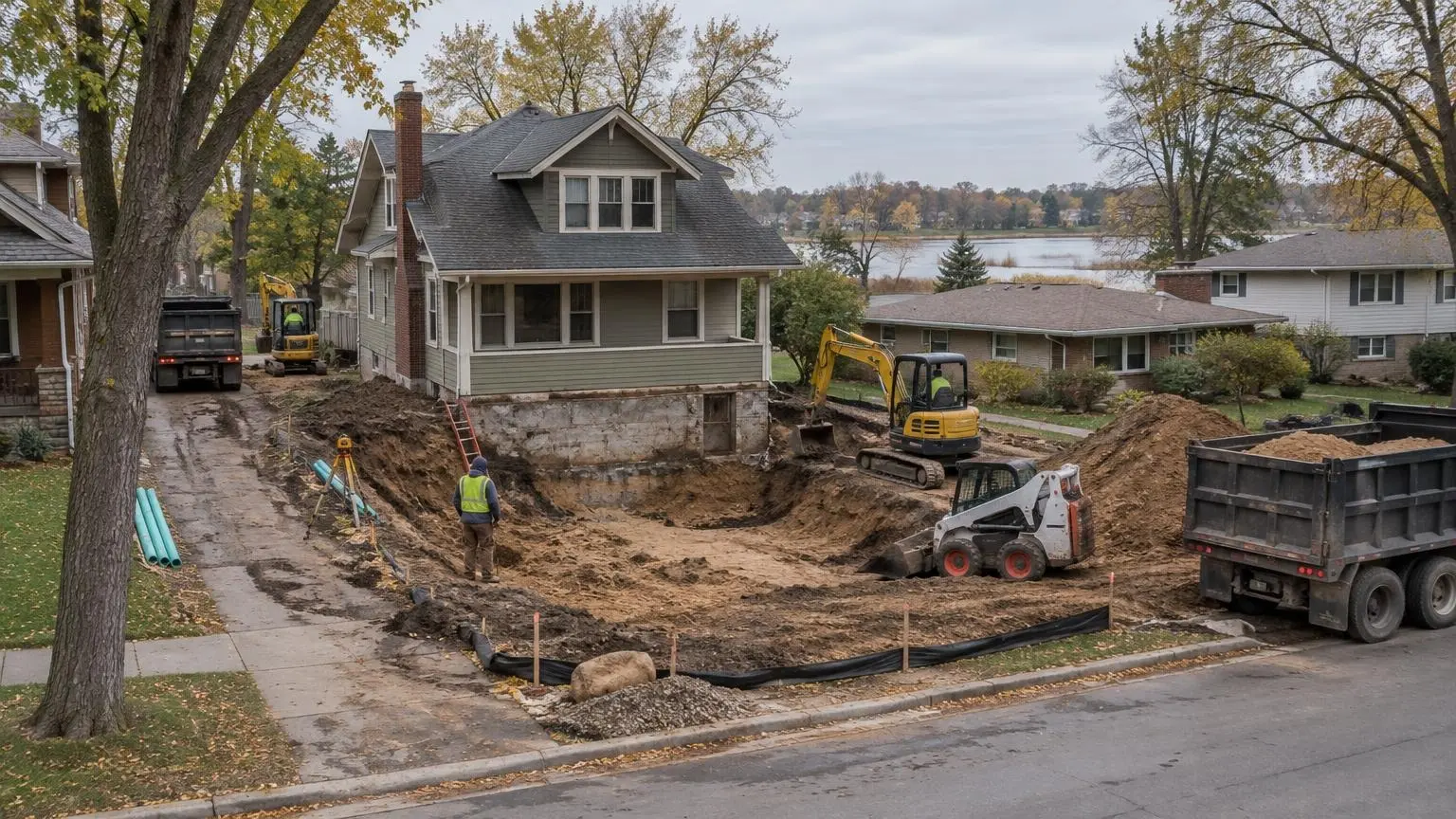
Excavation contractors in Minneapolis work on ground the glaciers built. The city is relatively flat, falling to 687 feet where Minnehaha Creek meets the Mississippi, with 13 lakes and 24 miles of lake shoreline inside its limits. Melting blocks of buried ice left the basins that became those lakes about 10,000 years ago. We handle the dirt work homeowners and builders need across the city and suburbs: basement and footing digs, teardowns, sewer and water services, French drains and grading, hauling and fill, and pool and hardscape excavation.
Sand, till and old lake beds
Two kinds of glacial soil cover much of the metro. Outwash plains, like the Anoka Sand Plain north of the city, are sand: the USDA describes Hubbard soils as 85 to 95 percent sand, excessively drained, with a seasonal saturated zone 1 to 2 meters down in spring. Till plains to the south and west carry loamy soils like the Lester series, with 24 to 35 percent clay in the subsoil. Sand caves into a trench and needs sloped or shored walls. Till holds a cut but drains slowly and needs compaction. Near lakes and wetlands, peat and organic soils can show up, and they cannot carry a footing.
Old housing stock
The 2020 census figures show 43.7 percent of Minneapolis housing units were built in 1939 or earlier. That is a lot of century-old sewer laterals, water services, block and stone foundations, and detached garages at the end of narrow lots. Lateral replacements, garage teardowns and basement digs for additions keep us busy in the city.
Frost and the digging season
The airport's 1991 to 2020 normals put January's average low at 8.8 degrees and seasonal snowfall at 51.2 inches. Ground freezes deep enough that footings and water lines must sit below the frost depth set by the Minnesota building code. Winter digging is possible but slower and more expensive: frost has to be broken or thawed, and backfill cannot be frozen. Spring thaw brings soft ground and road weight limits. We help you time the work.
Water and drainage
Precipitation is about 31.6 inches a year, much of it in summer storms, plus the meltwater from a winter's snow. Low spots, flat lots and yards that drain toward the house are the usual problems. French drains, regrading and buried downspouts fix most of them.
Lakes, wetlands and peat
The same melting ice that left the city's lakes left smaller kettles and wetlands across the suburbs. Some filled with peat, and some were later covered with sand to make building lots. Peat compresses under load, so a footing, slab or driveway over it settles. When a dig turns up dark, spongy soil, we stop, show you, and price removing it and replacing it with compacted granular fill.
How a job runs
- Site visit and access check (alley, side yard, boulevard trees)
- Written, itemized quote
- Gopher State One Call locates and city permits
- Protection for lawns, drives and neighbors
- Excavation, with spoil staged or hauled
- Compacted backfill and grade away from the house
- Cleanup, sweeping and restoration
Where We Work
We work in Minneapolis and Saint Paul and across Hennepin, Ramsey, Anoka and Dakota counties. First-ring suburbs like Richfield, St. Louis Park, Crystal and New Hope are full of 1950s ramblers with aging lines and garages. Edina, Minnetonka, Wayzata and Golden Valley see teardowns, additions and lakeside work. North of the city, Fridley, Coon Rapids, Blaine and Brooklyn Park sit on sandier ground near the Mississippi, while Plymouth, Maple Grove, Eden Prairie, Bloomington and Burnsville mix lakes, wetlands, bluffs and newer subdivisions. Each town page covers what is different there.
- Excavation Contractors in Minneapolis, MN
- Excavation Contractors in Saint Paul, MN
- Excavation Contractors in Bloomington, MN
- Excavation Contractors in Edina, MN
- Excavation Contractors in St. Louis Park, MN
- Excavation Contractors in Plymouth, MN
- Excavation Contractors in Minnetonka, MN
- Excavation Contractors in Richfield, MN
- Excavation Contractors in Golden Valley, MN
- Excavation Contractors in Maple Grove, MN
- Excavation Contractors in Brooklyn Park, MN
- Excavation Contractors in Eden Prairie, MN
- Excavation Contractors in Roseville, MN
- Excavation Contractors in Fridley, MN
- Excavation Contractors in Hopkins, MN
- Excavation Contractors in Wayzata, MN
- Excavation Contractors in Burnsville, MN
- Excavation Contractors in Coon Rapids, MN
- Excavation Contractors in Blaine, MN
- Excavation Contractors in Crystal, MN
- Excavation Contractors in New Hope, MN
Common Questions
How much do excavation contractors charge in Minneapolis?
HomeBlue's Minneapolis figures put a machine with operator at about $220 to $380 per hour, roughly $1,700 to $3,000 for a full day, with hauling at $400 to $600 or more per truckload. A new-home basement dig runs about $4,300 to $7,600 and a no-basement foundation dig about $2,600 to $4,500, before boulders, debris or hauling.
What do excavation contractors do?
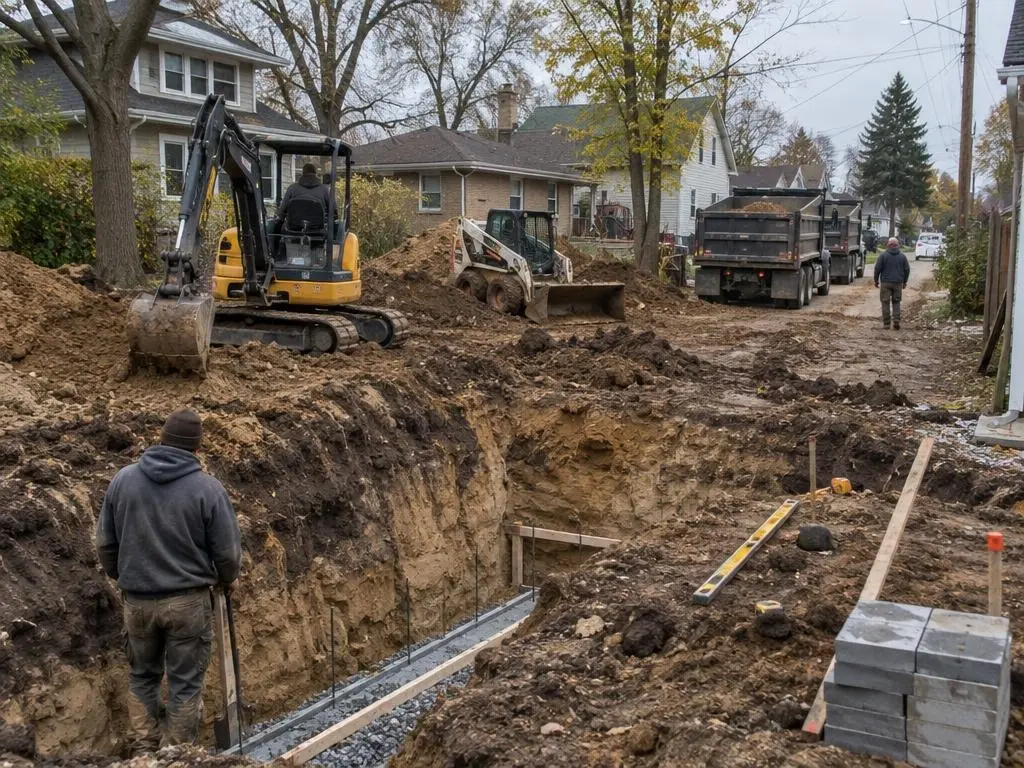
We dig, move and haul soil: basements and footings, trenches for sewer and water lines, grading and drainage, demolition of garages and houses, and digs for pools and patios. We also backfill, compact and restore the site afterward.
Can you dig in winter in Minnesota?
Yes, but it costs more and goes slower. Frost has to be broken or thawed, spoil freezes, and backfill must not go in frozen. Emergency sewer and water repairs happen year-round; planned projects are usually cheaper from late spring through fall.
Do landscapers do excavation?
Many do light grading and small digs. Basements, footings, service line trenches, teardowns and deep or large digs usually need an excavation contractor with bigger equipment, trench protection and hauling trucks.
Do I need to call before digging in my yard?
Yes. Minnesota requires notice to Gopher State One Call before excavation so underground utilities are marked. We request locates for every job we do.
Why do sandy trenches cave in?
Sand has little cohesion, especially when wet. Trench walls in outwash sand must be sloped back or shored, and federal safety rules require protection for trenches deeper than five feet.
How long does a typical excavation job take?
A garage teardown or sewer lateral dig is often one to two days. A new-home basement dig is about two to three days of machine time by HomeBlue's estimates, longer with hauling, boulders or frost.
Why Homeowners Call Excavation Contractors Minneapolis
Frost-season planning
We tell you what winter work costs and when spring load limits and thaw will slow things down.
Soil-aware trenches
Sand gets sloped or shored walls; till and clay get compacted backfill in lifts.
Alley and boulevard care
City lots are tight. We protect alleys, boulevard trees and neighbors' yards.
Itemized quotes
Digging, hauling, fill and restoration each get their own line.
Excavation Services We Offer
Six kinds of dirt work for homeowners and builders across the Twin Cities.
Basement & Footing Digs
Excavation for new basements, additions, garage footings and frost-depth foundations.
Learn more →Teardowns & Demolition
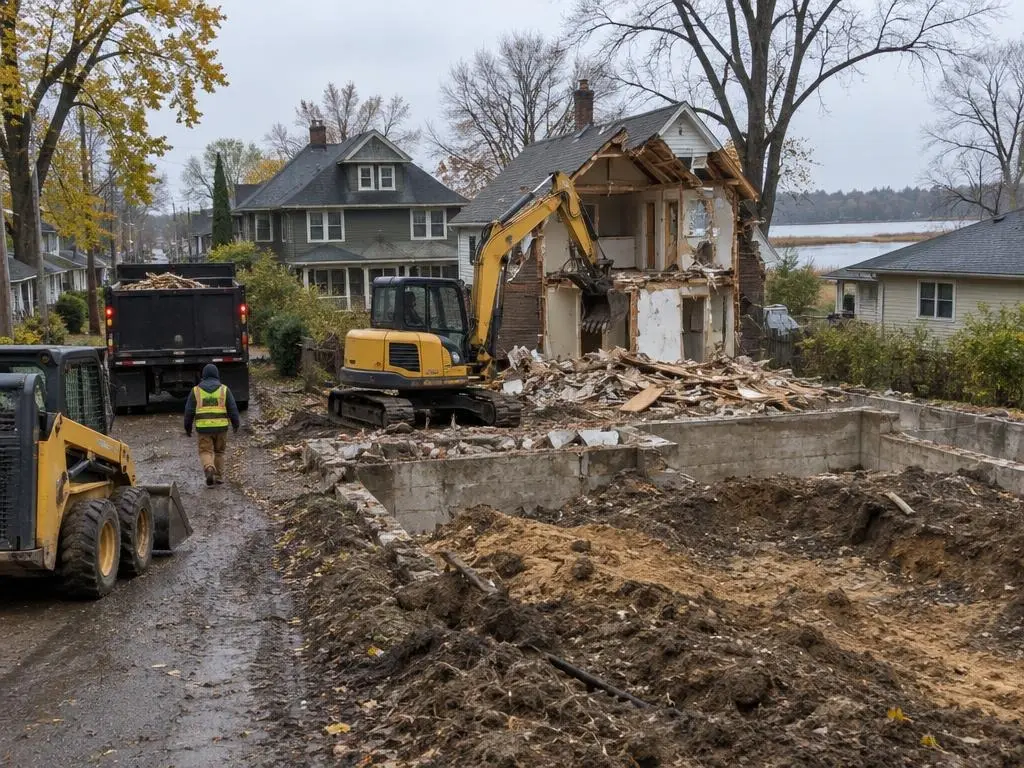
Garage, house and outbuilding demolition with foundation removal and site restoration.
Learn more →Sewer & Water Service Lines
Excavation for sewer lateral and water service replacement, below frost and to code.
Learn more →Yard Drainage & Grading
French drains, regrading, swales and buried downspouts for wet basements and soggy yards.
Learn more →Dirt Hauling & Fill
Hauling away excavated soil and debris, and delivering and spreading fill and topsoil.
Learn more →Pool & Hardscape Excavation
Digging for in-ground pools, patios, retaining walls, driveways and outdoor living projects.
Learn more →Get an Excavation Estimate in Minneapolis
Free site visits across the Twin Cities.